
For interiors, metal mesh is a material choice before it is a technical one. It gives a designer a surface that catches light, ages predictably and does not absorb anything 鈥?and it can be applied as a wall, a ceiling, a screen or a joinery detail. The technical questions come after the sample, which is why this page starts with how the material behaves rather than with a specification table.
Six finishesBacklightableNo combustible contentSamples in days
Free A4 sample · setting-out drawings · export packing and full document set.
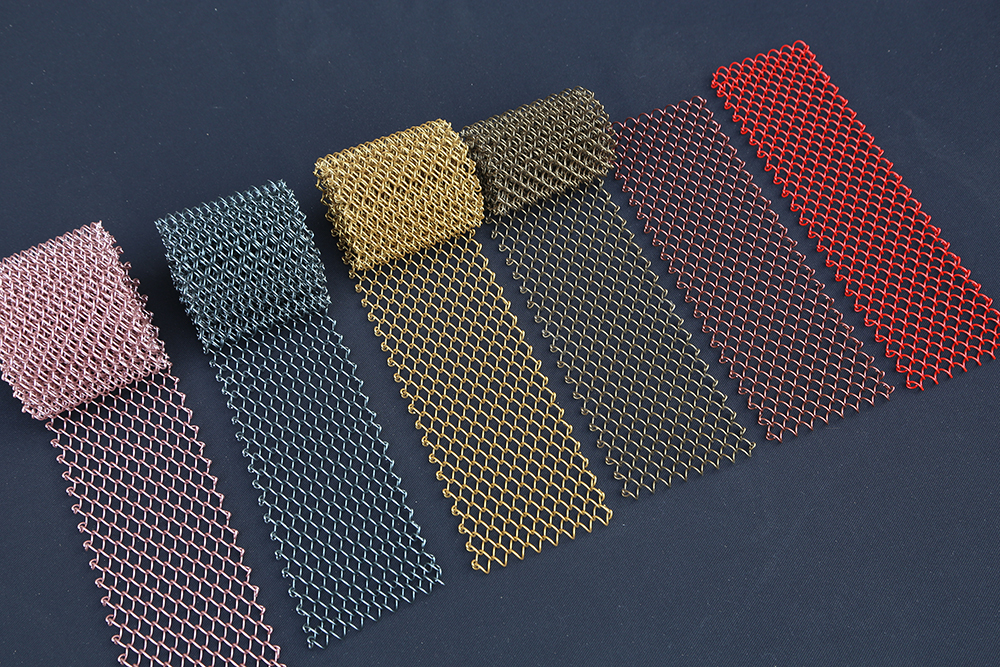
What decides an interior mesh choice
Four questions, and the first one is usually a photograph rather than a dimension:
- What light does it sit in? Backlit, daylight or artificial 鈥?mesh reads completely differently in each. A backlit wall wants a wider aperture and a bigger cavity; daylight wants a finish that does not flare.
- Is the colour allowed to move? Brass and copper patinate. If the scheme is fixed, specify a coated finish; if the scheme wants age, leave it natural and say so in the specification.
- Will it be touched? A screen at hand height collects fingerprints on mirror finishes. Satin and antique hide handling; mirror shows it.
- What is the acoustic requirement? Mesh is transparent to sound. Behind it, an absorptive backing changes the room; in front of it, nothing does.
Three ways to use mesh indoors
Each has a different reading, and the choice is usually made from a mood board rather than a table.
Metal coil drapery
Open, springy chain-mail texture. The most transparent and the most “metal” reading. See the mesh →
Woven wire drapery
Crimped cloth in soft pleats. Reads as fabric at a distance, metal close up. See the mesh →
Woven mesh panels
Rigid flat panels for walls, joinery and fixed screens. The architectural reading. See the mesh →
Four interior configurations
Backlit wall or reception back
Mesh on a frame with a lighting gap behind. The cavity depth sets whether the light reads as a glow or a grid of dots.
Ceiling veil
Fabric or drapery held flat above a space, hiding services and softening the ceiling plane.
Screen or room divider
The most common use: a boundary that keeps the room visually connected.
Joinery and furniture detail
Mesh inset into a cabinet, bar front or reception desk. Small panels, tight tolerances, and the finish matters more than the weave.
Constraint to approach
| Requirement | Approach | The trade-off |
|---|---|---|
| Backlighting | Wider aperture, deeper cavity, diffuser behind | Cavity depth consumes plan space |
| Fixed colour scheme | Coated or PVD finish | Loses the natural metal patina |
| Hand height and fingerprints | Satin or antique finish | Mirror is out, even where the scheme wants it |
| Acoustic comfort | Absorptive backing behind the mesh | The backing is visible through the mesh |
| Tight budget | Fewer, larger panels; standard finish | Panel joints become part of the design |
| Fast programme | Standard weave and finish from stock | Custom colour adds lead time |
Detailing for designers
The cavity is the design
A backlit wall is a lighting detail as much as a mesh one. Decide the gap (typically 60鈥?20 mm) with the lighting designer before the frame is built.
Hidden fixing
Most interior mesh is fixed from behind or in a rebate, so no fixing is visible on the room side. That decision changes the panel edge.
Edge trim
Where mesh meets plaster, stone or timber, the junction needs a trim or a shadow gap. It is the detail that separates a fitted look from an unfinished one.
Ask for two samples, not one: a flat piece for colour and a hanging piece for how it reads in the space. The second one is what wins the approval.
Sequence for a fit-out
Interior projects are decided late, so the mesh has to be protected in the programme:
- Sample approved, in the actual light if possible.
- Frame or subframe set out with the joinery and the lighting.
- Panel sizes confirmed after the site survey, not from the drawing.
- Install, then protect 鈥?mesh marks easily while other trades are still working.
- Final clean with a soft cloth, not a solvent.
Documents and compliance
For the specification file: material, finish, aperture, panel size and the fixing method 鈥?plus the material test report and the sample reference, so the approved sample and the delivered material are the same thing.
Fire performance is a straight answer, not a marketing one. The mesh contains no combustible material. If the room needs a documented rating, tell us the standard and we will confirm which reports we hold.
Samples and finishes
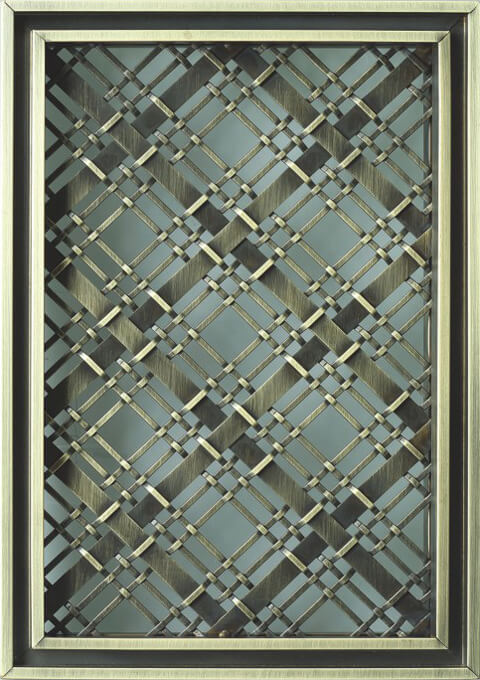
Six finishes are held as samples: stainless mill, satin and mirror, brass, copper and PVD colours. Ask for the set, then narrow it.
Ordering and lead times
| Item | Detail |
|---|---|
| Minimum order | Confirmed at quotation |
| Sample | Free A4 sample on request |
| Lead time | Confirmed at quotation |
| Packing | Export carton and pallet, edge protected |
| Documents | Material test report, packing list, invoice |
| Terms | FOB / CIF / DDP |
| Drawing support | Setting-out drawings with the order |
For interiors, the sample usually decides the programme. Standard finishes ship faster than custom colour.
Frequently asked questions
Can I get samples before specifying?
Yes 鈥?a free A4 sample in the finish you are considering, and a hanging piece if the mesh will be a curtain.
Will brass and copper change colour?
Yes, unless coated. That is a design decision: specify clear-coat if the colour must stay fixed, or leave it natural if patina is welcome.
Does it show fingerprints?
Mirror finishes do; satin and antique hide handling. For anything at hand height, satin is the safer specification.
Can it be backlit?
Yes. The cavity depth and the aperture set how the light reads. Too shallow and the light blotches; too deep and the mesh stops glowing.
Is it suitable for a restaurant or bar front?
Yes 鈥?it does not absorb smoke, grease or spills the way fabric does, and it can be wiped down.
How much does it weigh?
It depends on the weave and the wire. Tell us the span and the fixing and we will confirm the load rather than guess.
Can it be curved or wrapped?
Fabric can follow a curve; rigid panels are formed to a template; coil drapery hangs in folds rather than wrapping.
What is the minimum order?
Confirmed at quotation 鈥?for interiors it is often driven by the sample and the panel count rather than by area.
Ask for a sample set
Tell us the project type and the finish you are considering. We will send the samples and, if it helps, a hanging piece so the material can be seen in the room.
Sales: sales@decorwiremesh.com · Reply within one working day · Setting-out drawings with every order.