
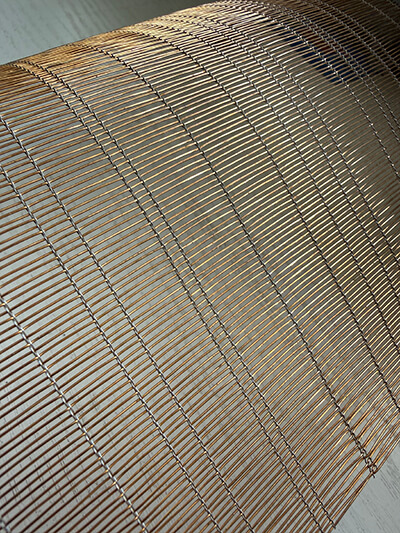
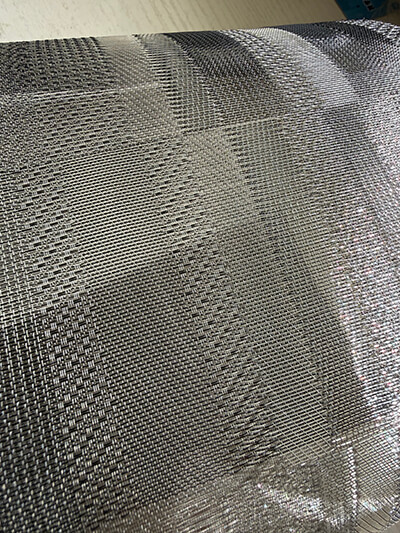
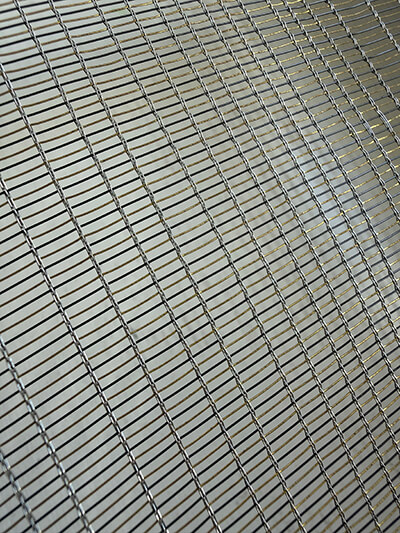
Laminated glass metal mesh is the same fine woven wire cloth we supply as decorative woven metal fabric, sealed between two glass plies. Inside the laminate it does three jobs at once: it puts a pattern or an image into the glass, it sets how much light comes through, and it decides how much of what is behind the glass can be read from the other side. The face you touch stays glass, so the pattern cannot be scratched, cleaned off or picked at. It is specified for bathroom and shower doors, sliding doors, balustrade infill, partitions, door panels and feature glazing.
Pattern inside the laminateLight and privacy0.1–0.5 mm wireMade to panel size
Free A4 sample · drawing support · export packing and full document set.
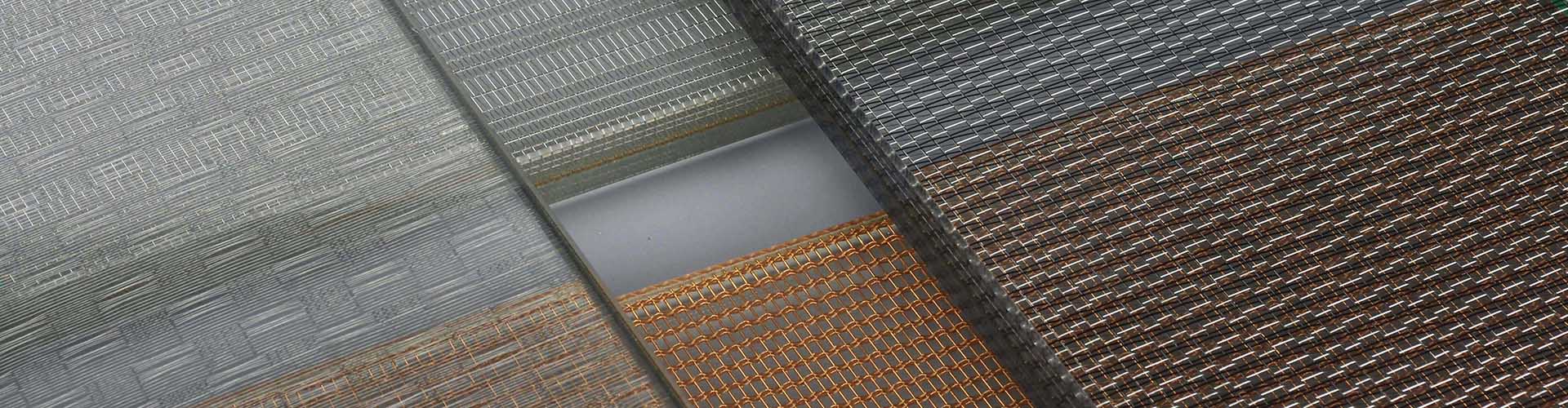
A pattern, a light filter, a privacy screen
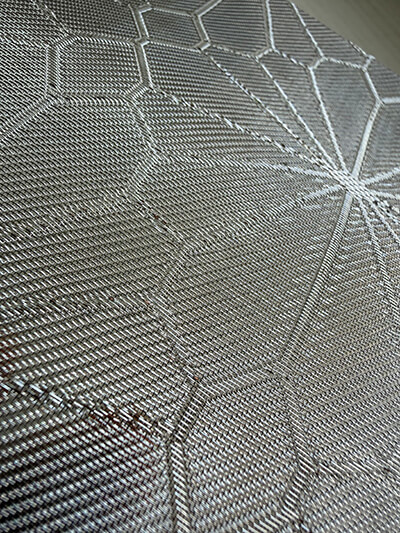
Inside the laminate the mesh does three things at once, and all three come from the same decision — the weave, the wire and the tone. It carries the pattern or the image, it decides how much daylight reaches the room, and it sets how much of the space behind the glass can be read from the other side. That is why the sample matters more than the specification sheet.
Because the mesh is bonded between two plies, the pattern is protected: there is no surface layer to scratch, no aperture to collect dust, and nothing for a cleaning cloth to catch on. The same property is what makes it usable at handle height, on a shower door or behind a balustrade where a film would not last.
It is also the same material as our decorative woven metal fabric. The mesh is woven, coloured and patterned the same way, then cleaned, cut to the glass size and supplied lamination-ready — one product with two routes to site.
- Pattern or image. Woven geometry, lettering or a picture, carried by wires of different tones rather than printed on a film.
- Light. Open area and wire diameter decide how much light passes; the glass and the interlayer add their own tint on top of that.
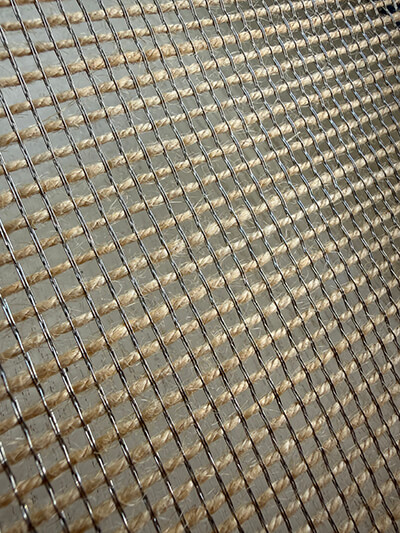
- Privacy. A dense weave veils what is behind the glass and still passes light; an open weave reads as a screen rather than a blind.
- No extra layer. No film, no frit, no coating on the surface — the pattern is part of the build-up.
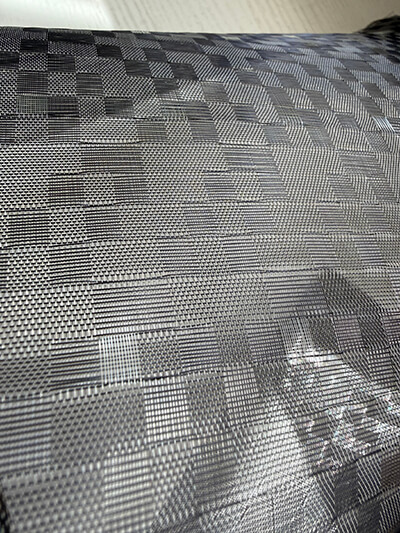
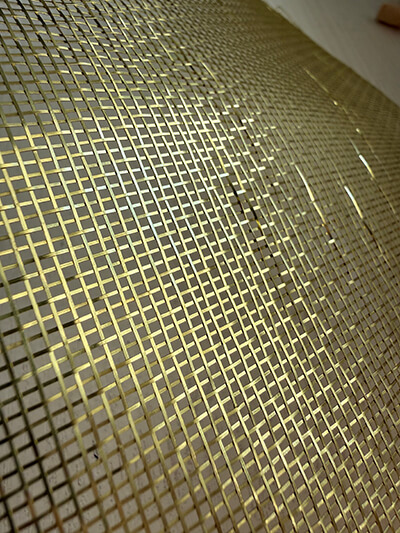
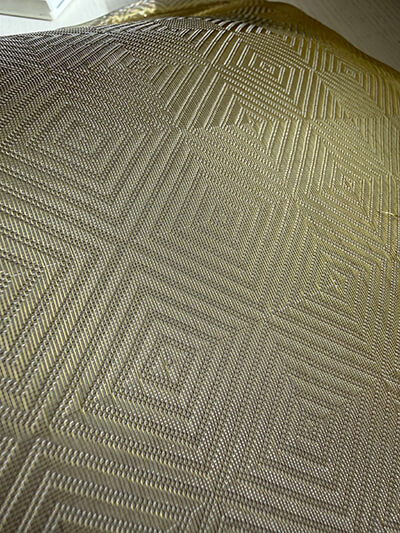
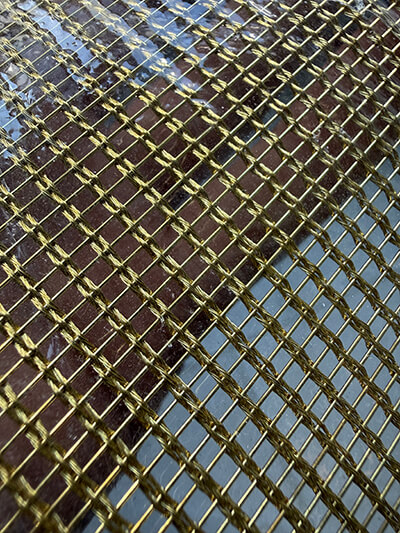
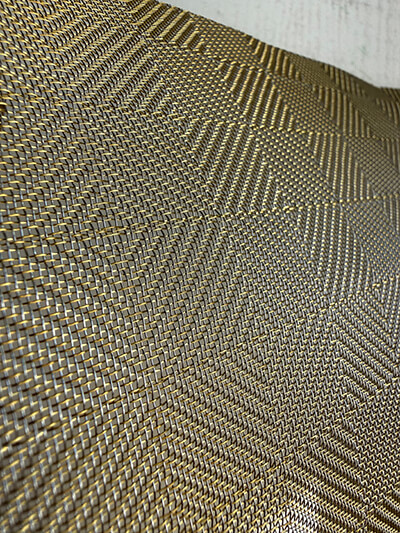
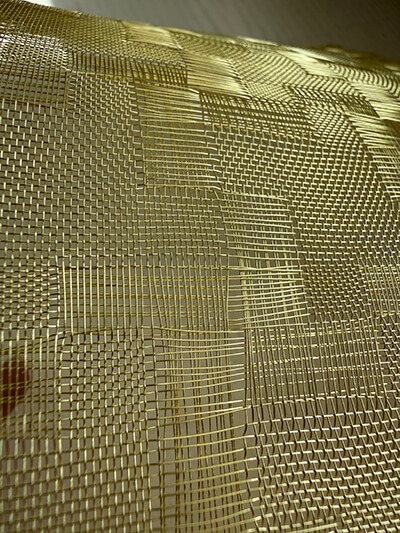
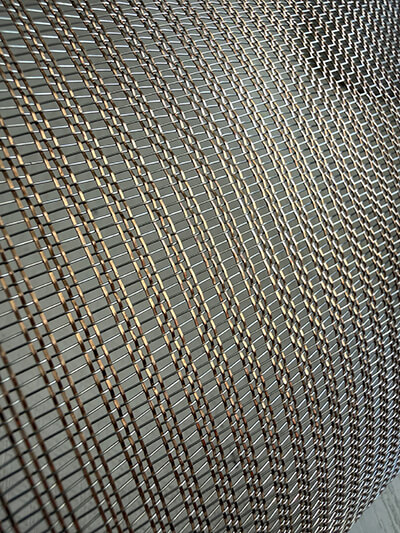
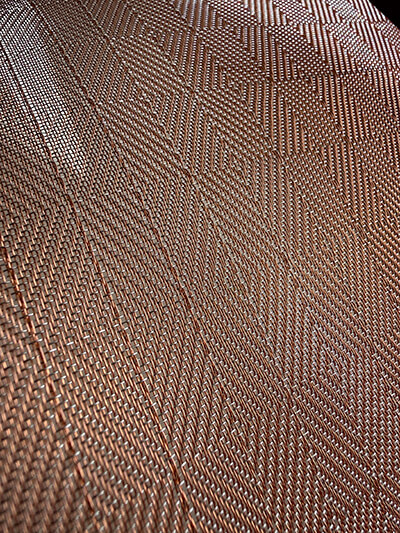
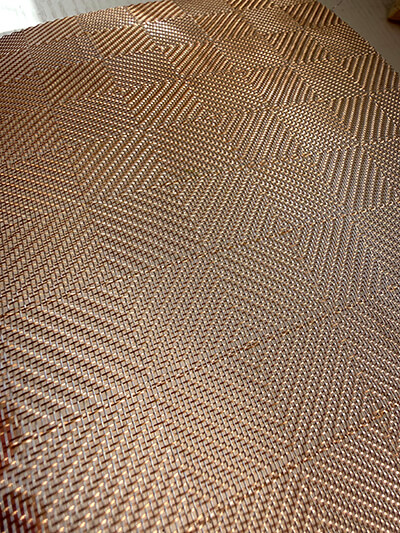
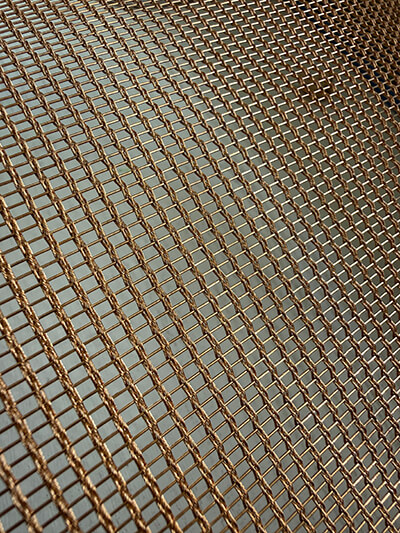
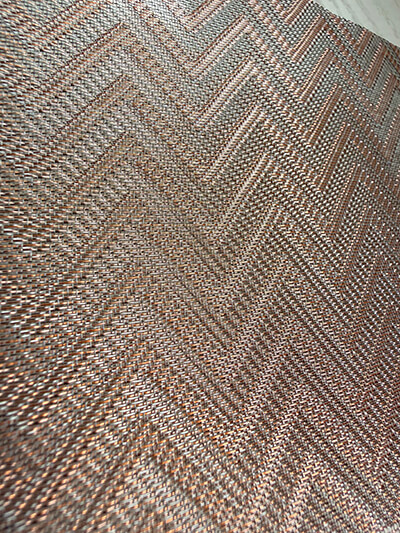
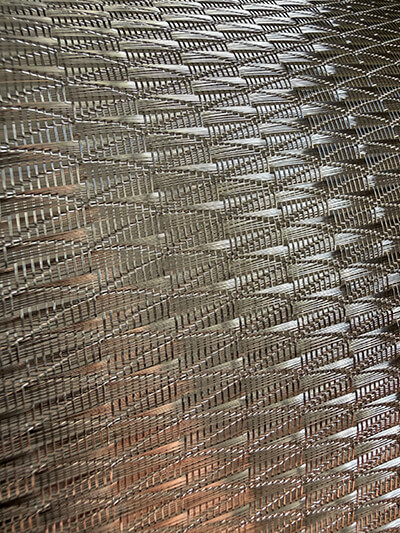
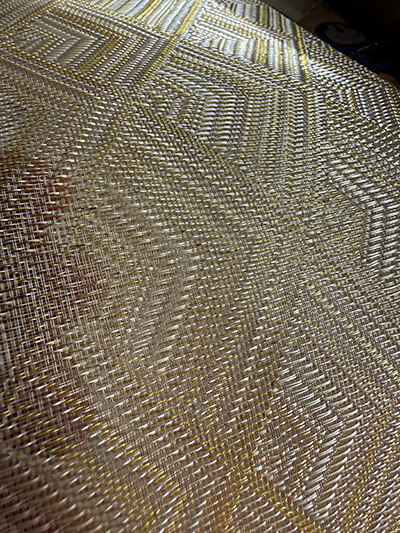
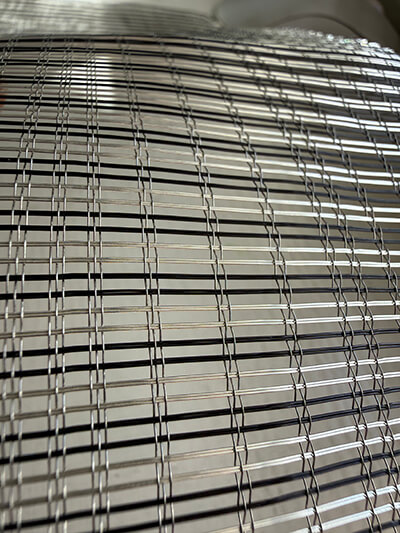
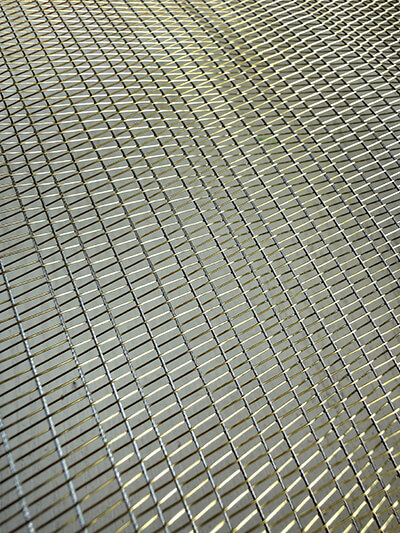
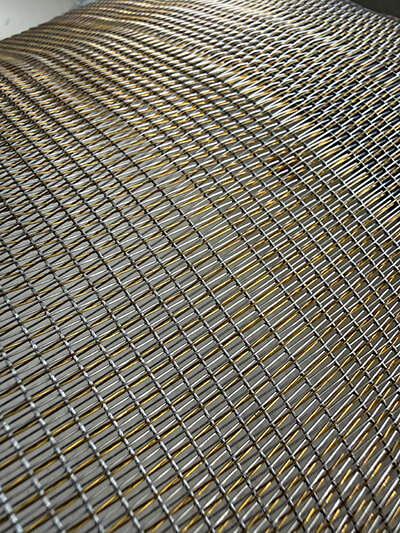
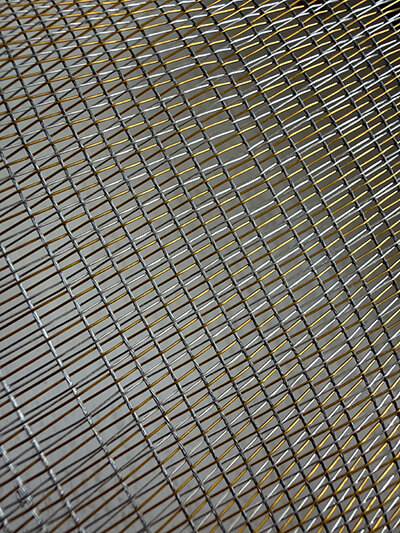
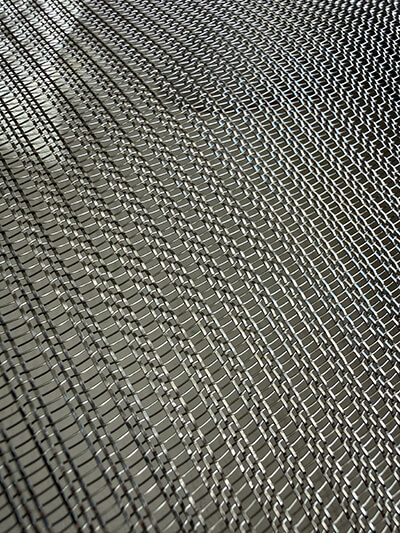
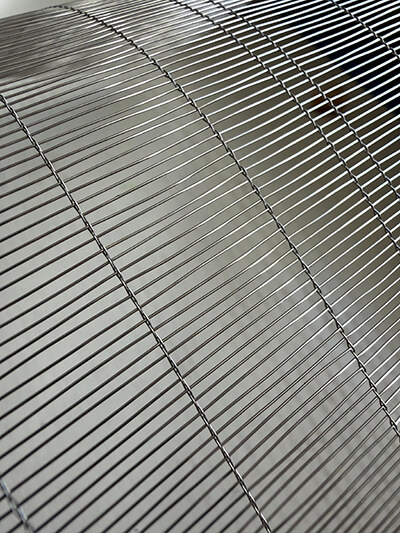
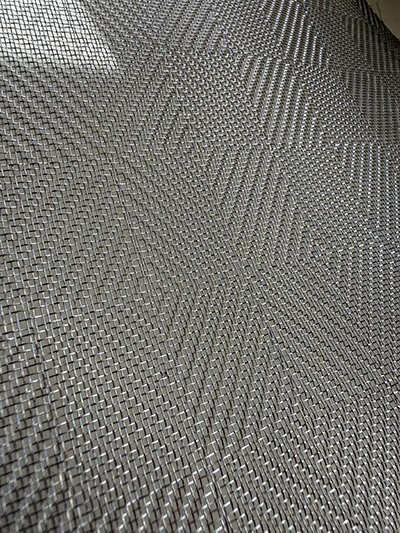
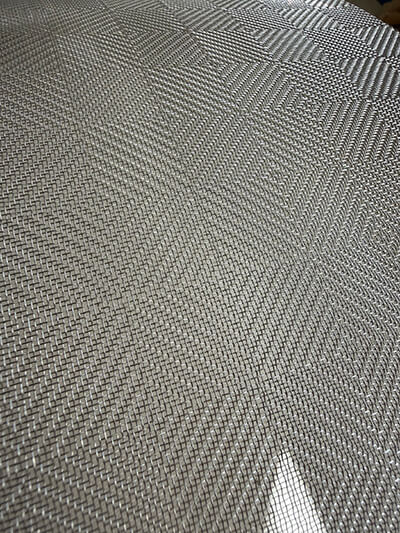
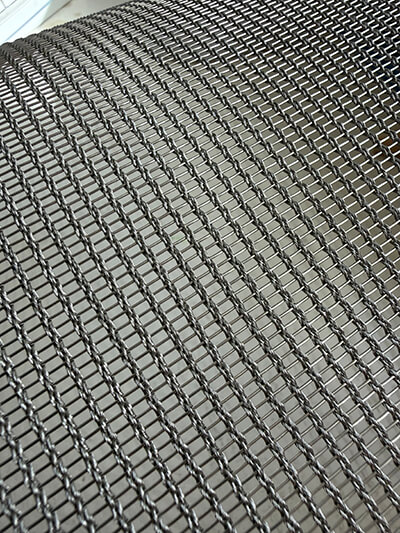
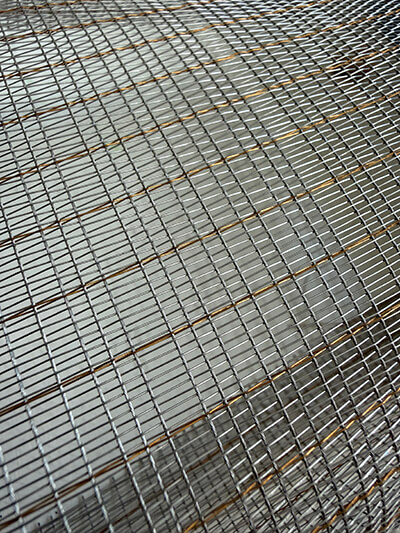
Specifications
The glass build-up belongs to the processor; the mesh belongs to us. What is listed here is the mesh, plus the two numbers it controls — light and privacy. Ranges are indicative: tell us the pattern and the panel size and we will confirm the rest.
| Parameter | Value | What it changes |
|---|---|---|
| Construction | Woven mesh bonded between two glass plies | The mesh is behind glass on both faces, so the pattern is untouchable |
| Mesh material | Silver-plated copper, stainless 304 / 316, brass, copper, aluminium | The tone of the pattern and how it reads in daylight |
| Wire diameter | 0.1 – 0.5 mm | How fine the pattern can be, and how much open area is left |
| Weave | Plain weave, twill, image weave | Sharpness of the pattern and the density of the veil |
| Open area | Quoted per weave | The starting point for light transmission |
| Light transmission | Confirmed against the glass build-up | Glass, interlayer and mesh each take a share of the light |
| Privacy | Open, veiled or obscured | Set by open area and pattern density; approved on a sample |
| Interlayer | EVA or PVB | The processor’s line decides which |
| Panel size | Made to your glass panel size | Cut with the edge clearance the processor sets |
| Minimum order | Confirmed at quotation | Sample laminate on request |
Materials and finishes
Sealed inside the laminate, the metal cannot oxidise in service — the tone you approve is the tone that stays. So the alloy is chosen for effect, not for durability.
| Material | Tone and finish | Best for | Avoid when |
|---|---|---|---|
| Silver-plated copper | Bright, takes colour; several tones in one panel | Patterns and images, warm interiors | A single flat metal tone is all that is wanted |
| Stainless 304 | Neutral grey; mill, satin, etched | Neutral interiors, partitions | A warm decorative tone is required |
| Stainless 316 | Neutral grey; satin, etched | Humid interiors, pool surrounds, coastal sites | Dry interiors where the budget is tight |
| Brass / copper | Warm; the patina is set before lamination | Hospitality and retail feature glazing | A cool neutral panel is wanted |
From woven mesh to laminated panel
The mesh is made here; the lamination is done by the glass processor. The two processes are planned together, because the mesh has to arrive clean, flat and cut to their edge clearance.
- Pattern agreed — a woven geometry, or a separated image if the pattern is a picture.
- Mesh woven in the chosen wires, then cleaned and degreased for lamination.
- Cut to the glass size with the edge clearance the processor asks for.
- Assembled between the plies with EVA or PVB.
- Laminated under heat and pressure by the processor.
- Checked for haze and bubbles, edge-worked and packed for site.
Interlayer mesh against the alternatives
Four ways to put a pattern into glass. The difference is where the pattern sits, and what it does to light.
| Solution | Pattern depth | Light control | Privacy | Touch | Cost |
|---|---|---|---|---|---|
| Woven mesh interlayer | Real metal — texture and sheen | Set by open area | Veiled to obscured | Behind glass | Medium–high |
| Printed interlayer | Photographic, flat | Ink density | The printed image only | Behind glass | Medium |
| Ceramic frit | Flat, opaque | Strong | Opaque bands only | On the glass — can chip | Low–medium |
| Applied film | Printed, flat | Film density | The film only | On the surface — wears | Low |
Rule of thumb: if the pattern should read as metal and work with the light, use the mesh. If it has to be a photograph, print the interlayer. If it only has to block a view, frit or film does it for less.
Specifying the panel
The processor sets the build-up. What we need is the build-up and the pattern decided at the same time, so the mesh, the light and the privacy are settled before the glass is ordered.
Doors and shower screens
Handle height is the reason for putting the pattern inside the glass: it survives cleaning, rings and contact that a film does not. Privacy comes from the weave, not from an extra coating.
Balustrades and railings
The glass carries the load and the mesh decorates it. The pattern has to clear the shoe or clamp zone, so that zone is set out first and the image is composed around it.
Partitions and screens
One panel or a run: the pattern repeat and the joint positions are set on the drawing, so the image does not break where the glass does.
Feature glazing and wall linings
Backlighting changes the reading of the panel — the same mesh looks silver in daylight and gold against a warm light. Approve the sample in the light it will actually see.
Send the glass build-up — glass thickness, interlayer type, panel size — with the pattern or the artwork. We confirm the mesh and the open area; the processor confirms the lamination window and the rating.
Where interlayer mesh is used
Bathroom and shower doors
Privacy that survives a wet room and a cleaning routine. See the application →
Balustrades and guarding
Glazed guarding with a woven veil inside the glass. See the application →
Partitions and screens
Meeting rooms and offices that need light but not a clear view. See the application →
Wall linings
Glass-faced wall panels with a pattern behind the surface. See the application →
Sample laminates
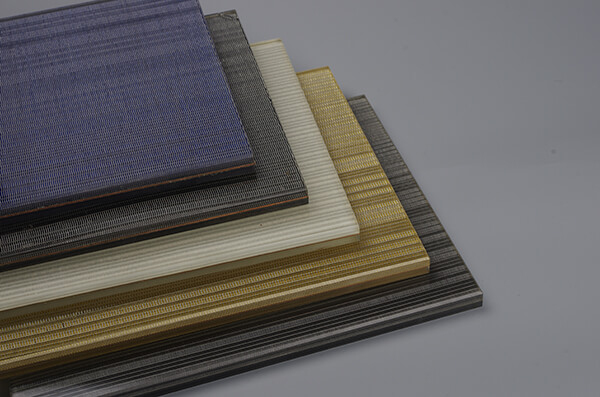
A physical laminate is the only honest approval for this product: the same mesh changes tone behind glass, the interlayer adds a slight tint, and the privacy reads differently depending on which side is lit.
Ordering and lead times
| Item | Detail |
|---|---|
| Minimum order | Confirmed at quotation |
| Lead time | Confirmed with the glass processor |
| Sample | A4 mesh sample; laminate samples on request |
| Mesh supply | Cut to glass size, cleaned and lamination-ready |
| Packing | Flat pack or roll, edges protected |
| Documents | Material test report, packing list, invoice |
| Terms | FOB / CIF / DDP |
| Drawing support | Pattern setting-out with the order |
We can supply the mesh alone for your processor, or coordinate with them on the full panel. Say which, because it decides who owns the lamination window.
Frequently asked questions
What is laminated glass metal mesh?
A fine woven wire cloth — the same material as our decorative woven metal fabric — sealed between two glass plies. It puts a pattern, a light filter and a degree of privacy into the glass, while the surface you touch stays glass.
How much light does it let through?
Open area and wire diameter set it, and the glass and interlayer take their share on top. We quote the open area of the weave, and the panel figure is confirmed against the processor’s build-up.
How much privacy does it give?
A dense weave veils what is behind the glass and still passes light; an open weave reads as a screen. Privacy also depends on which side is lit, so it is judged on a laminate sample rather than a photograph.
Can it carry a picture or a pattern?
Yes — the same woven patterns and images as the fabric: geometric shapes, portraits, landscapes, lettering or abstract art, subject to what the wire can hold at the viewing distance.
Does the mesh affect the strength of the glass?
No. The glass build-up carries the load and holds the rating; the mesh decorates the interlayer. Where the panel is structural, the build-up is set by the engineer and the mesh is chosen to fit inside it.
EVA or PVB?
Either, as the processor’s line requires. The mesh is supplied clean, flat and cut to their edge clearance so it runs through the process without a change to the recipe.
Can it be used outside?
As an interlayer, yes, where the glass build-up is specified for exterior use. The edge seal is what protects the laminate, and that detail belongs to the processor.
How is it cleaned?
As glass. Normal glass cleaner and a cloth; the mesh is inside the laminate and cannot be reached, which is the point of putting it there.
Send the build-up and the pattern
Send the glass thickness, the interlayer type, the panel size and the pattern or artwork. We reply with the mesh, the open area and a price — or a laminate sample first, if the tone and the privacy still have to be seen.
Sales: sales@decorwiremesh.com · Reply within one working day · Setting-out drawings with every order.