
Woven wire drapery is crimped woven wire cloth hung as a curtain. Where metal coil drapery reads as an open chain-mail texture, woven wire drapery reads as cloth: the crimped weave gives a flatter, denser face that folds in soft vertical pleats. It is used for room dividers, window treatment, fireplace screens and ceiling features where the material has to look like fabric but behave like metal.
Wire Ø 0.5—.5 mmCrimped woven clothHangs in soft pleatsMade to opening size
Free A4 sample · drawing support · export packing and full document set.
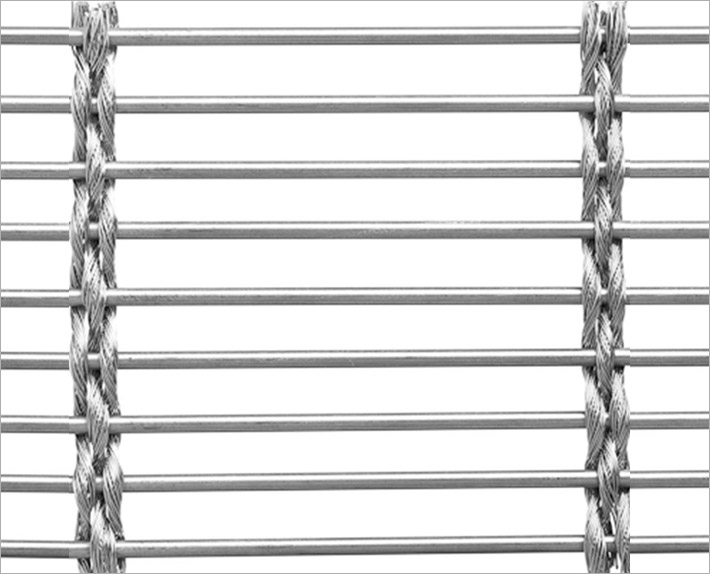
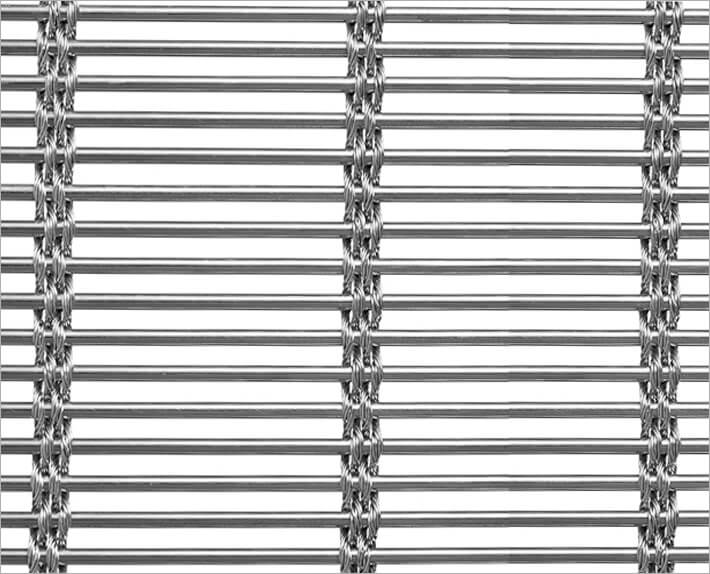
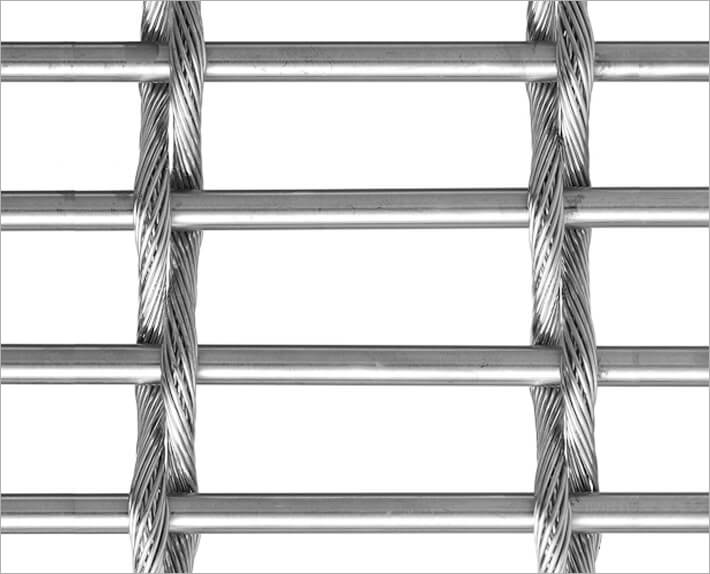
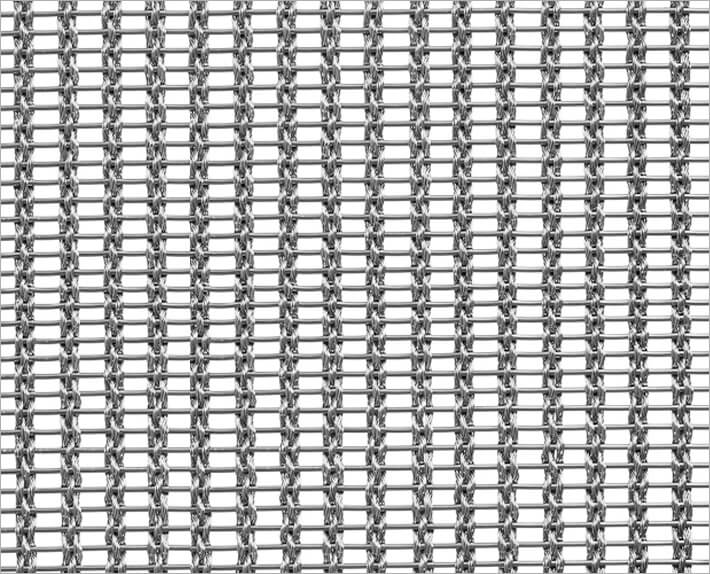
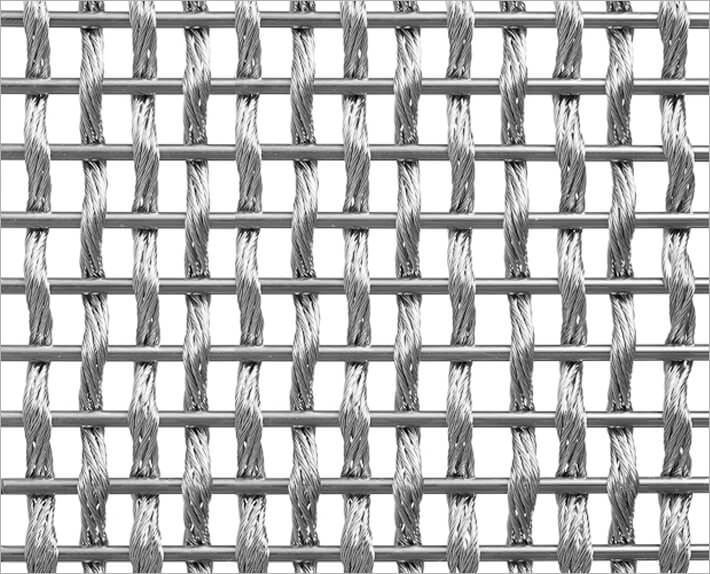
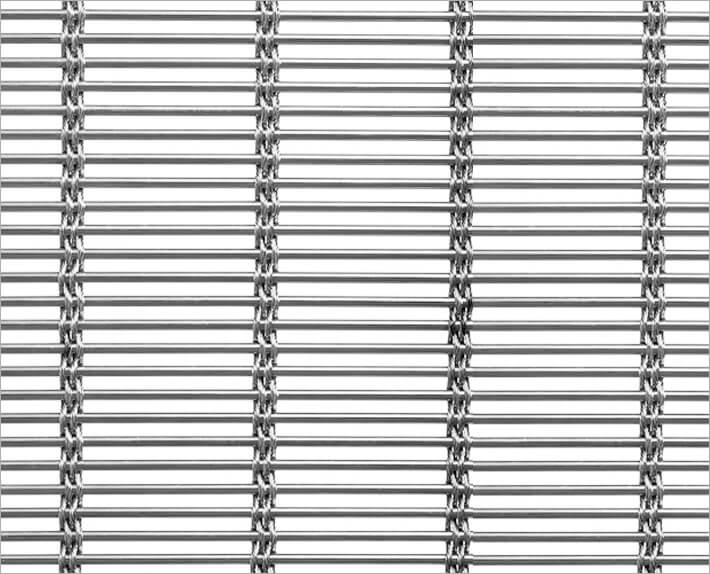
The cloth end of the metal curtain range
A curtain has to do two things a panel cannot: it has to fold, and it has to look soft. Woven wire drapery is crimped before weaving, so the sheet holds a gentle set and pleats evenly instead of hanging in stiff panels.
The result sits between textile and mesh. It filters a view without blocking it, it does not absorb smoke or dust the way fabric does, and it can be cleaned with water —which is why it turns up in restaurants, hotels and fireplace surrounds where a textile would be a maintenance problem.
- Reads as cloth. Crimp and fine wire give a dense face with soft pleats, unlike the open diamond of coil drapery.
- No combustible content. Wire only —no backing or coating to burn. If a documented rating is required, tell us the standard and we will confirm what we hold.
- Dark or bright, not faded. Stainless, brass and copper can be left natural or PVD-coated; the colour is metal, not dye.
- Made to the opening. Width is woven to your track length, so a wide opening needs fewer seams.
Specifications
Standard programme below. The pleat depth and the fullness of the curtain are set at ordering, because they change how much material the opening needs.
| Parameter | Value | What it changes |
|---|---|---|
| Material | Stainless 304 / 316, brass, copper, aluminium | 316 for humid or coastal interiors |
| Wire diameter | 0.5 – 1.5 mm | Finer wire pleats more softly |
| Aperture | Fine to medium, made to order | Density of the veil |
| Weight | Approx. 2 – 5 kg/m² | Used for the track and fixing load |
| Curtain width | Made to your opening size | No standard sheet limit |
| Fullness | Set at ordering (pleat ratio) | Decides how much material the opening needs |
| Finish | Mill, satin, mirror, PVD, antique | Colour is set at the finishing stage |
| Minimum order | Confirmed at quotation | Sample piece on request |
Materials and finishes
For a curtain, the finish is seen against light —which is why satin reads better than mirror in most interiors.
| Material | Typical finish | Best for | Avoid when |
|---|---|---|---|
| Stainless 304 | Satin, mill, PVD black | Dividers, ceilings, window treatment | Humid or coastal interiors |
| Stainless 316 | Satin | Spas, kitchens, coastal interiors | Cost-driven dry interiors |
| Brass | Polished, satin, antique, coated | Restaurants, hotels, warm schemes | Uncoated where a fixed colour is specified |
| Copper | Polished, brushed, antique | Feature curtains and fireplace surrounds | Exposed exterior without a coating decision |
How a curtain is made
Crimp memory is what lets the cloth hang in even pleats, so the weave is set before cutting.
- Wire drawn and crimped to set the aperture and the fold direction.
- Woven into a continuous sheet, then heat-set to hold the crimp.
- Cut to the opening size with the agreed fullness.
- Edge hemmed or folded, wire ends captured, carriers fitted.
- Finish applied and packed on a roll with the track schedule.
Woven wire drapery against coil drapery
These two are the closest pair in the range, and the choice is about texture and fold, not about performance.
| Aspect | Woven wire drapery | Coil drapery |
|---|---|---|
| Texture | Flat, cloth-like, dense | Open chain-mail, springy |
| Fold | Soft vertical pleats | Wider, looser folds |
| Best at | Veils, window treatment, fireplace screens | Partitions, large ceiling features |
| Weight | Approx. 2 – 5 kg/m² | Approx. 2 kg/m² in the standard build |
| See-through | Filters the view | More transparent |
Rule of thumb: if the curtain has to look like fabric, woven wire drapery. If it has to read as a screen and cover a large span, coil drapery. Both can hang on the same track.
Hanging and pleating
The track sets the pleat, so the two are specified together.
Ceiling track with carriers
The standard detail. Carriers at fixed centres give even pleats; the track is set out to the opening and the curtain made to match.
Rod or rail
For fixed curtains and fireplace screens. The top edge is hemmed around the rod, and the curtain is not drawable.
Fixed and tensioned
For a flat veil rather than a pleated curtain —useful where the curtain sits close to a wall or inside a reveal.
Fullness matters: a 1.5× pleat ratio reads as a soft curtain, 2× reads as a full one. Tell us the look and we will size the material —quoting from the opening width alone usually under-orders by 30–0%.
Where woven wire drapery is used
Room dividers
Drawable screens between spaces. See the application →
Window treatment
Light-filtering curtains that do not block the view. See the application →
Fireplace screens
Spark screens with no combustible fabric. See the application →
Ceiling features
Soft metal veils over a services zone. See the application →
Curtain samples
Ask for a hanging sample rather than a flat one: a 300 mm piece on a small rod shows the pleat, the density and how the metal catches light.
Ordering and lead times
| Item | Detail |
|---|---|
| Minimum order | Confirmed at quotation |
| Lead time | Confirmed at quotation |
| Sample | Free A4 sample on request |
| Packing | Export carton and pallet, edge protected |
| Documents | Material test report, packing list, invoice |
| Terms | FOB / CIF / DDP |
| Drawing support | Setting-out drawings with the order |
Order the track and the curtain together. A curtain made to one carrier pitch will not hang evenly on another.
Frequently asked questions
What is woven wire drapery?
Crimped woven wire cloth hung as a curtain. The crimp makes it fold in soft pleats and gives a denser, more cloth-like face than coil drapery.
What is the difference from metal coil drapery?
Texture and fold. Coil drapery is an open chain-mail with springy folds and more transparency; woven wire drapery is flat and cloth-like with soft vertical pleats. Performance and fixing are broadly similar.
Does it block the view?
It filters rather than blocks. Density is set by the aperture —finer mesh hides more, coarser mesh stays more transparent.
Is it suitable for a fireplace?
Yes, and it is one of the few options that contains no combustible fabric. Ask for the frame or rod detail, because a fire surround needs a fixed panel rather than a drawable curtain.
How much material do I need?
More than the opening width: a 1.5× fullness reads as a soft curtain, 2× as a full one. Tell us the look and we will size it.
Can it be used outdoors?
It is an interior product. For exterior work, 316 and a confirmed finish are the starting point, and wind movement has to be designed for.
How is it cleaned?
Dust with a soft brush or vacuum on low suction; wipe with a damp cloth and mild detergent, then dry.
Which track do I need?
A ceiling track with carriers at fixed centres gives even pleats. Order the track and the curtain together so the carrier pitch and the curtain header match.
Send the opening and the look you want
Track length, height, and whether the curtain should read as a soft veil or a full curtain. We will size the material and quote the track with it.
Sales: sales@decorwiremesh.com · Reply within one working day · Setting-out drawings with every order.